Guide
Things to do in Menorca: 15 places worth your time, from Ciutadella to the Talayotic sites
Things to do in Menorca: 15 places by area, from Ciutadella and Maó to four Talayotic World Heritage sites, southern coves, Fornells and lighthouses.
In short
Menorca is about 50 km from end to end, and this guide gathers 15 places to see, grouped by area so you can combine them in a day: the old town of Ciutadella, Maó harbour and the Fortalesa de la Mola, four Talayotic sites (World Heritage since 2023), the southern coves, Fornells, Monte Toro and the Cavalleria and Punta Nati lighthouses.
Menorca is a small island, around 50 kilometres from end to end, with two historic towns (Maó and Ciutadella), a prehistoric landscape that became a World Heritage Site in 2023, a single natural park and a coastline where each stretch looks quite unlike the next. This guide gathers 15 places worth building a trip around, grouped by area so you can combine them in a single day.
Each stop gives what we could verify from official sources or the local press and, where one exists, the matching listing in our directory. Opening hours and prices change every season and several places publish nothing reliable for 2026: we say so when that is the case, and it is wise to confirm before you set off.
Ciutadella: the old town, Pont d'en Gil and Punta Nati
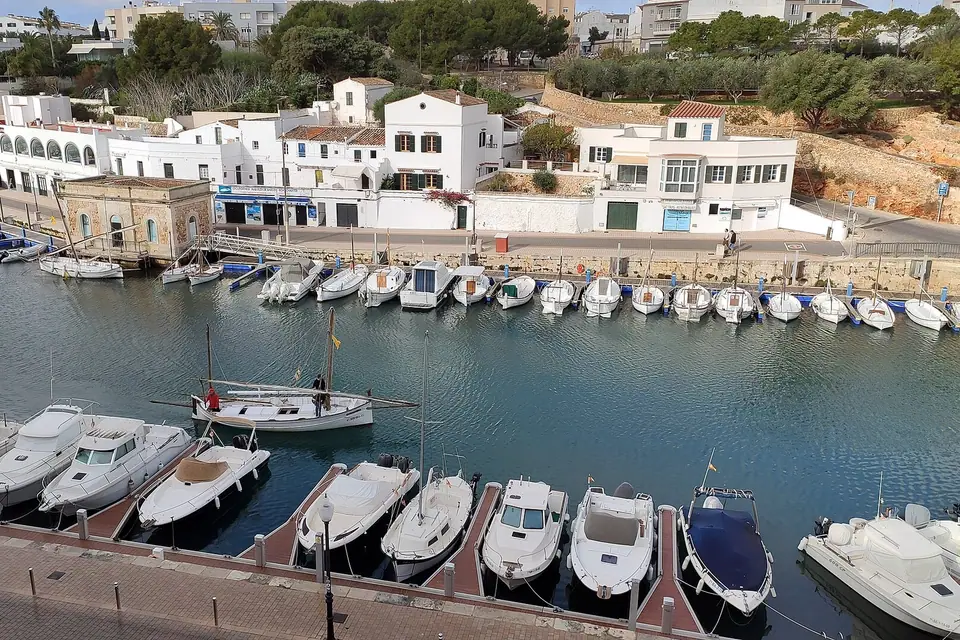
1. Ciutadella old town. According to Menorca's tourism guide, Plaça des Born is the gateway to the historic centre: a 22-metre obelisk commemorates the defence against the Turkish attack of 1558, and the town hall, the Teatre des Born and the Torre-Saura and Salort palaces stand around it. The Catalan Gothic church has been a cathedral since 1795; the inner harbour is kept for pleasure craft, fishing boats and traditional llaüts, because commercial traffic moved to the Son Blanc breakwater in 2011. Ses Voltes is the popular name for Carrer Josep Maria Quadrado, an arcaded street of shops and bars. Strolling is free; museum and church interiors keep their own hours, and the Sant Joan processions in June make access harder. Tip-based free tours run too.
2. Pont d'en Gil and Punta Nati. In the north-west, the natural arch of Pont d'en Gil can be seen from a car park about 500 metres away, a five-minute stony walk according to a local guide. Punta Nati lighthouse opened in 1913, after the French steamer General Chanzy was wrecked in 1910, and the setting is bare rock and shadeless cliff, best in the late afternoon. One source mentions shuttle buses from Ciutadella's Via Perimetral, but there is no timetable, so ask first. Between the two points the Camí de Cavalls gives about 5 km on foot, and the official Punta Nati to Ciutadella stage is 10.5 km.
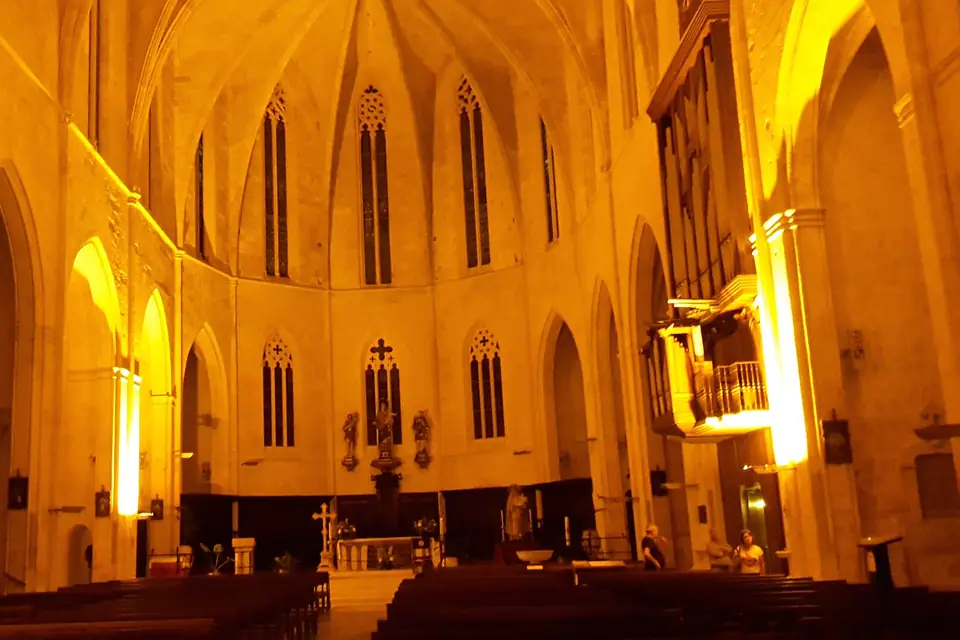
Ciutadella old town: Es Born and Ses Voltes
A free stroll through Plaça des Born, the arcaded Ses Voltes street and the medieval layout of the former capital's old town.
Google lists it shut on Saturdays and Sundays
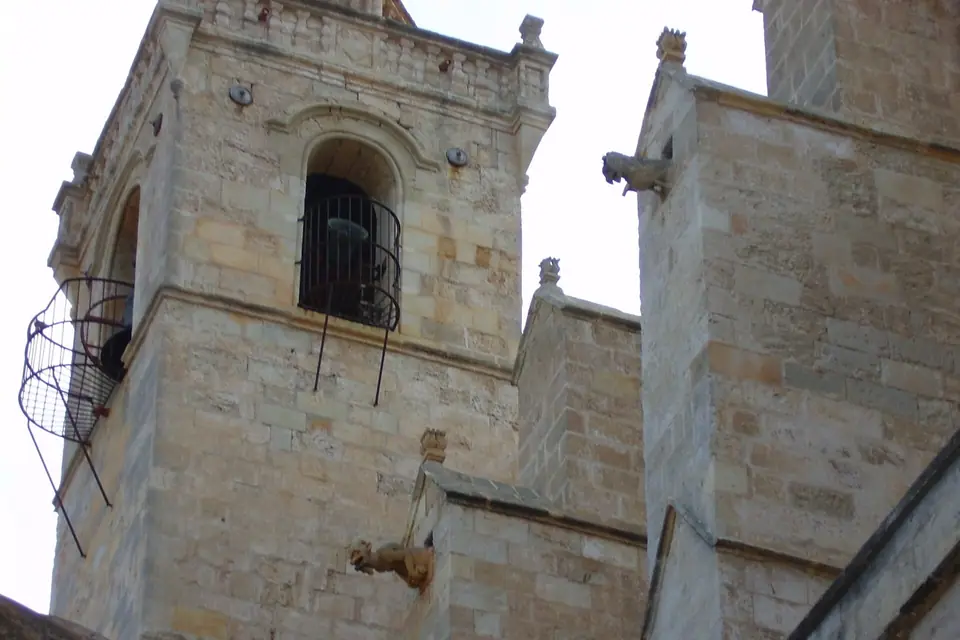
Bisbat de Menorca – Catedral i Museu Diocesà
Ciutadella Cathedral and Diocesan Museum
Gothic Santa Maria cathedral in the old town and the diocesan museum in the former Augustinian convent.
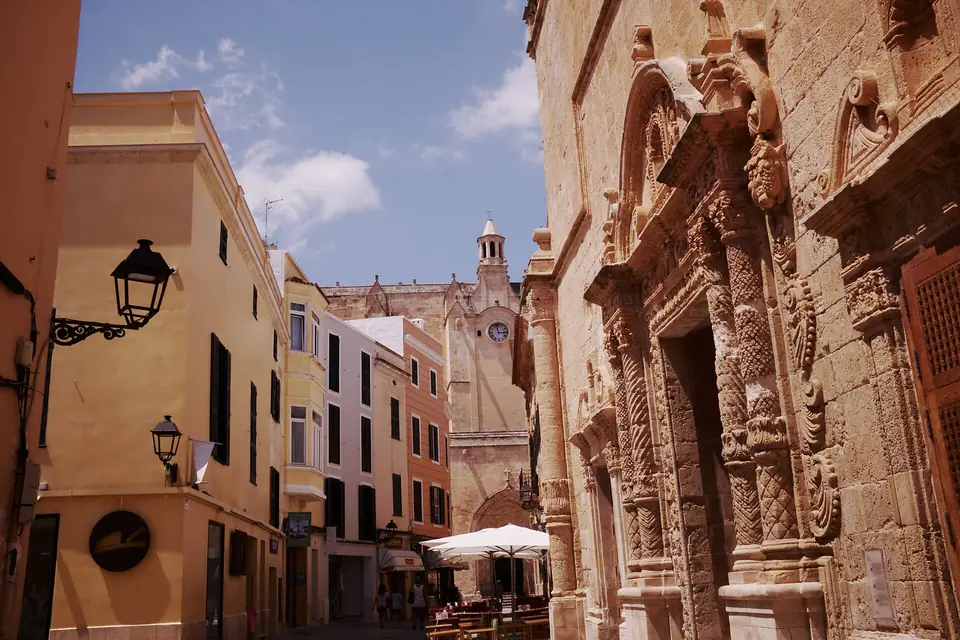
Ciutadella Municipal Museum at Can Saura
The city's history and archaeology museum, housed since late 2018 in the Can Saura mansion after leaving the Bastió de sa Font.
Google lists it shut on Saturdays and Sundays
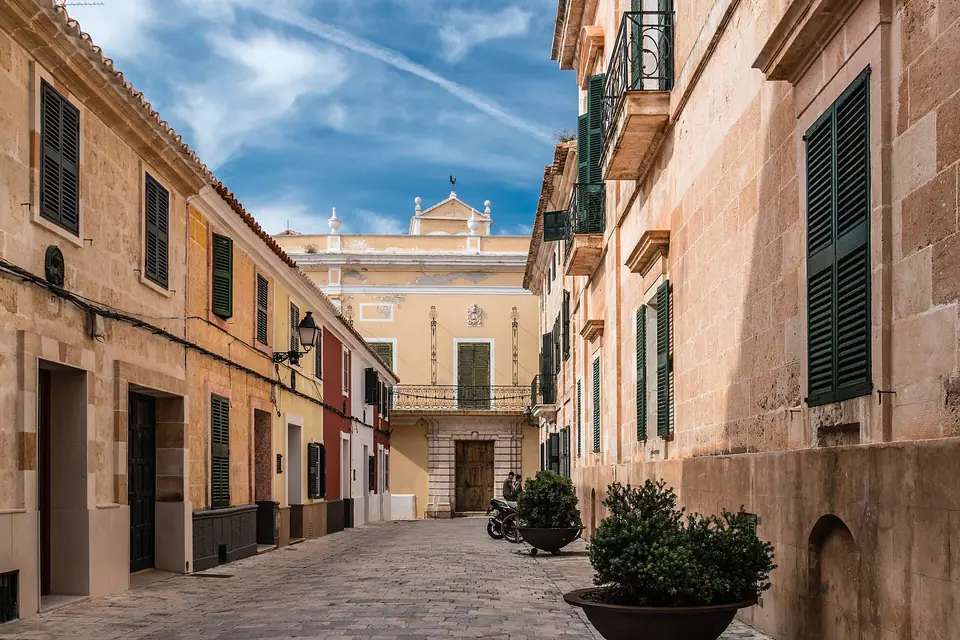
Free Tour Ciutadella (guías locales)
Ciutadella old town free tour
A guided walk of about two hours through the old town, port and fish market, paid by tip to the guide.
Pont d'en Gil, Ciutadella's natural arch
A natural rock arch over the sea near Cala'n Blanes, about a 5-minute walk from the car park; a good sunset spot.
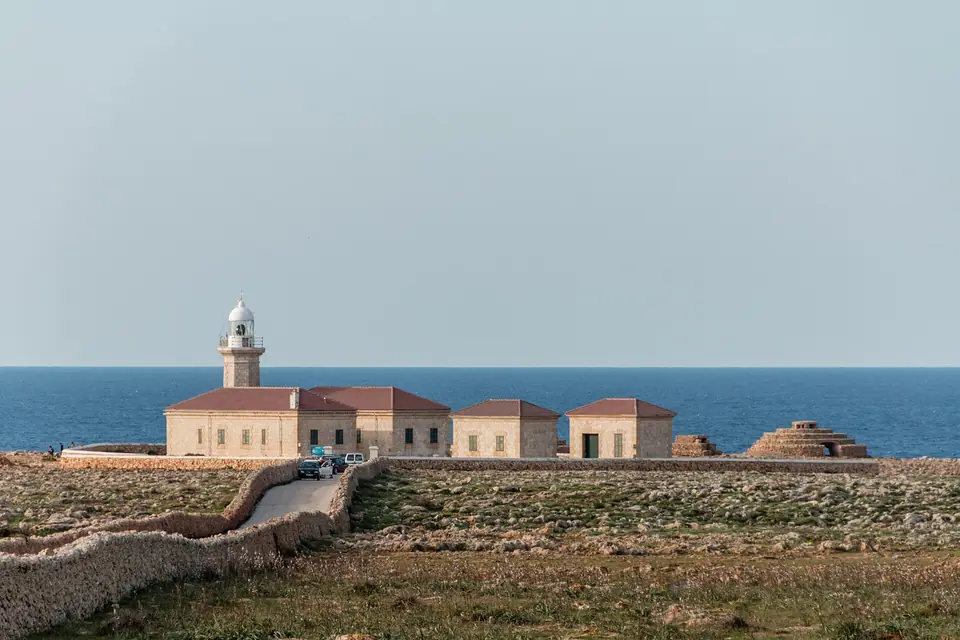
Punta Nati lighthouse and the north-west cliffs
A lighthouse from 1913 on the cliffs of the far north-west, 6 km from Ciutadella and a sunset meeting point; shuttle buses run from the Via Perimetral.
Maó and its harbour: the old town, La Mola and Illa del Rei
3. Maó harbour and old town. The old town is a 10 to 15 minute walk from the harbour, linked by stairways such as the Costa de ses Voltes beside Plaça del Carme and the fish market; Plaça de la Conquesta is cited as one of the best viewpoints over the harbour. To get your bearings before heading to the sites, the Museu de Menorca opens Tuesday to Sunday with general admission of 4 euros (free on Sundays and in some other cases) according to its website, and is closed on Mondays. On the waterfront, the Xoriguer distillery offers an hour-long visit with a tasting for 15 euros per person, Monday to Friday, booked online.
4. La Mola fortress. A nineteenth-century fortress with bastions, moats, powder magazines and viewpoints over the harbour and the sea. The official website gives general admission as 8.25 euros (5.75 for over-65s, ages 12 to 16 and residents; 4.25 for ages 6 to 11; free for 0 to 5) and hours that change by month: April to September 10:00 to 20:00; February, March and November 10:00 to 14:00 and closed on Mondays; closed in January. There is a guided tour of about 90 minutes, a 15-inch Vickers battery visit and a buggy tour; the phone number is +34 971 364 040.
5. Illa del Rei and the Llatzeret. Two harbour islands with very different pasts. Illa del Rei is now an art centre with exhibitions, gardens and sculpture; directories give free entry and a paid boat from Maó (about 10 euros according to a 2023 guide), with hours of 10:00 to 17:00 during a 2026 show: book the boat on the official website. The Llatzeret, the old quarantine station, is visited with a guide on dates set by the Consell, with a boat from Cales Fonts; a 2023 ordinance set 18 euros per adult, so check the current programme.
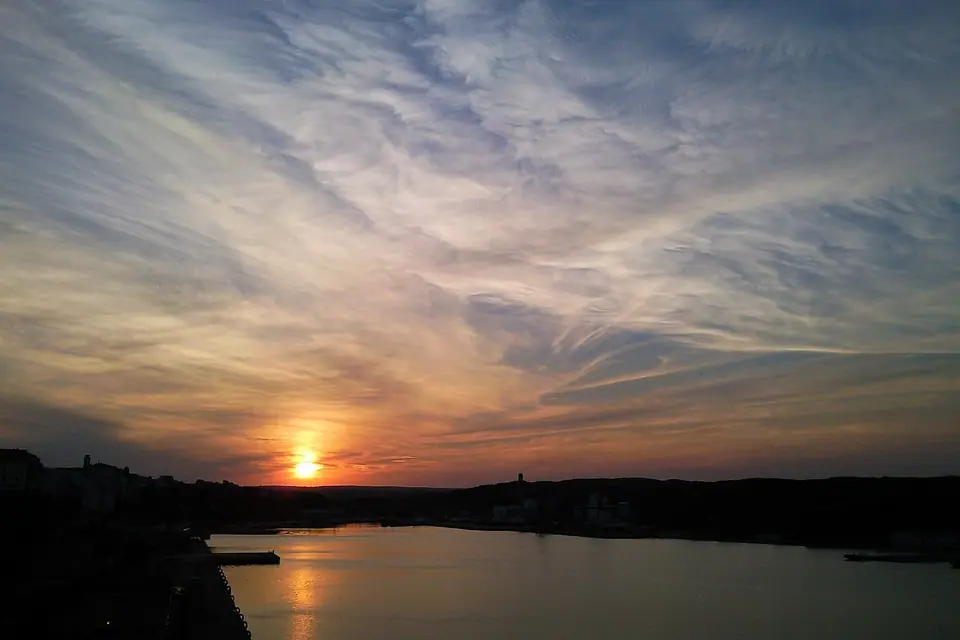
Walking Maó harbour and its stairways
A walk between Maó's old town and its natural harbour by the stepped lanes, with viewpoints over the bay.
Google lists it shut on Saturdays and Sundays
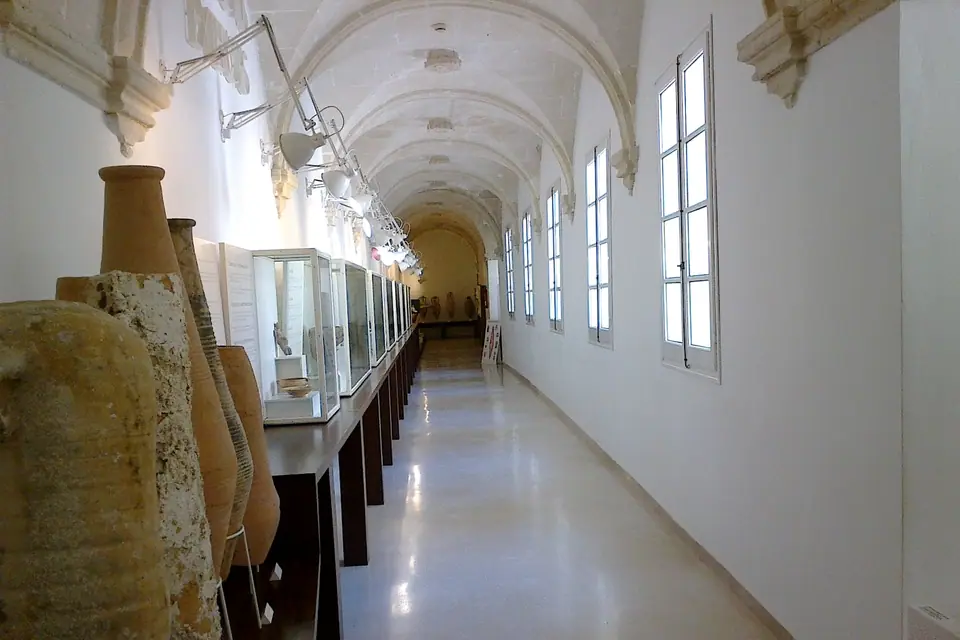
Museu de Menorca, the island's museum
Museum in Maó's Sant Francesc convent with Menorca's archaeology and history collections.
Google lists it shut on Mondays
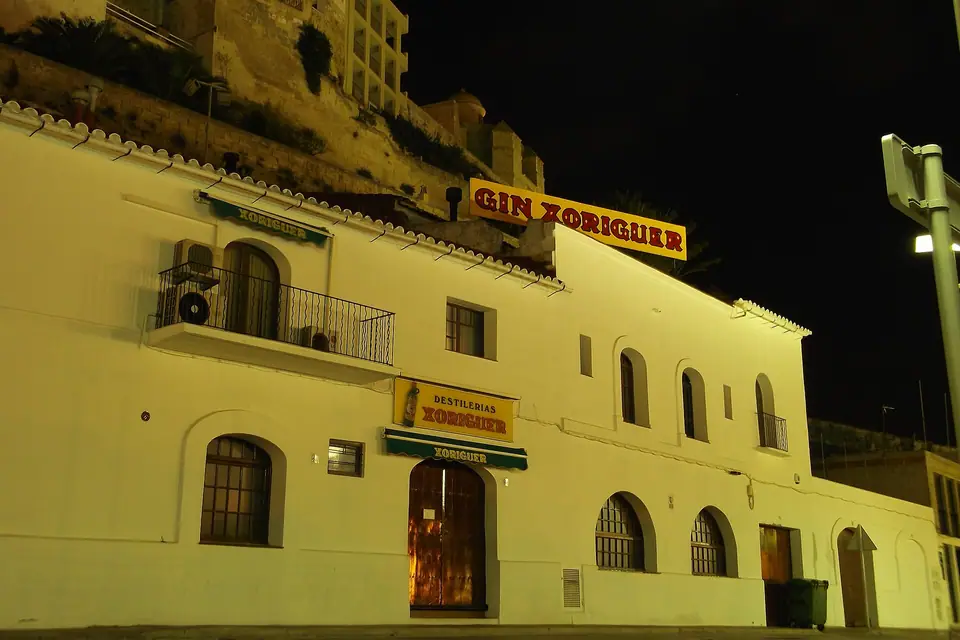
Xoriguer gin distillery visit with tasting
One-hour guided visit to Maó's copper stills, finishing with a tasting of gins, pomada and liqueurs with local nibbles.
Google lists it shut on Saturdays and Sundays
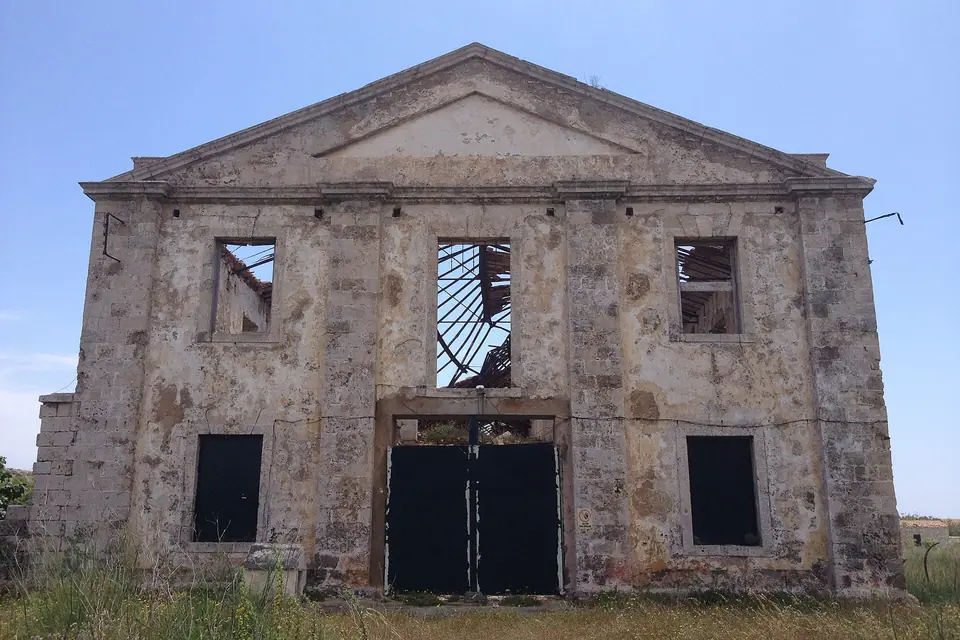
La Mola fortress, self-guided visit
Self-guided walk round the Isabel II fortress, with map and information panels, at the mouth of Maó harbour.
Google lists it shut on Mondays
La Mola fortress guided tour of galleries and bastions
Ninety-minute guided tour of defensive fronts, underground galleries, powder magazines and viewpoints.
Google lists it shut on Mondays
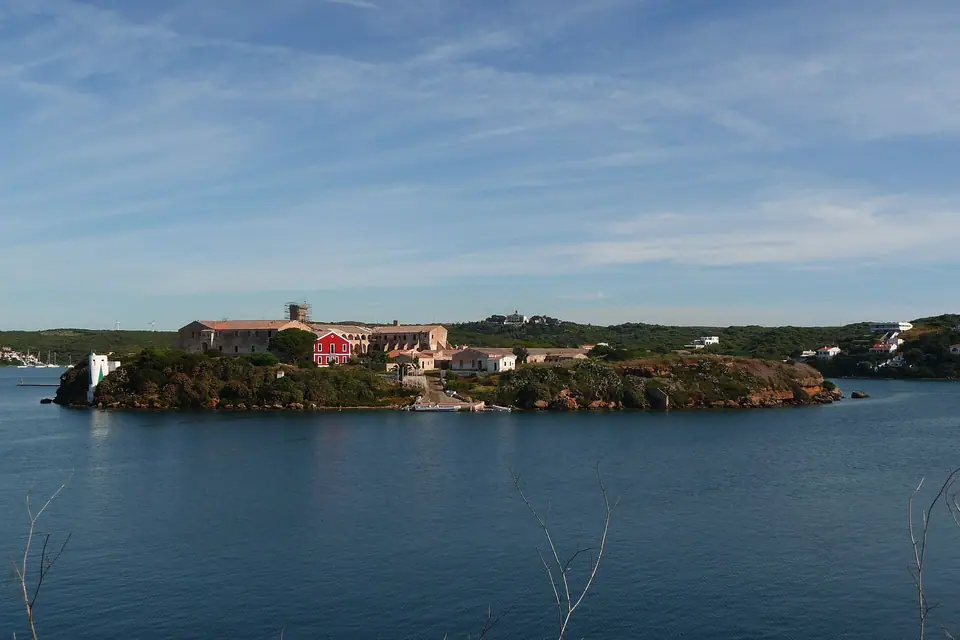
Illa del Rei: art, gardens and sculpture
Visit to the island in Maó harbour with exhibitions, gardens and open-air sculpture, reached by shuttle boat.
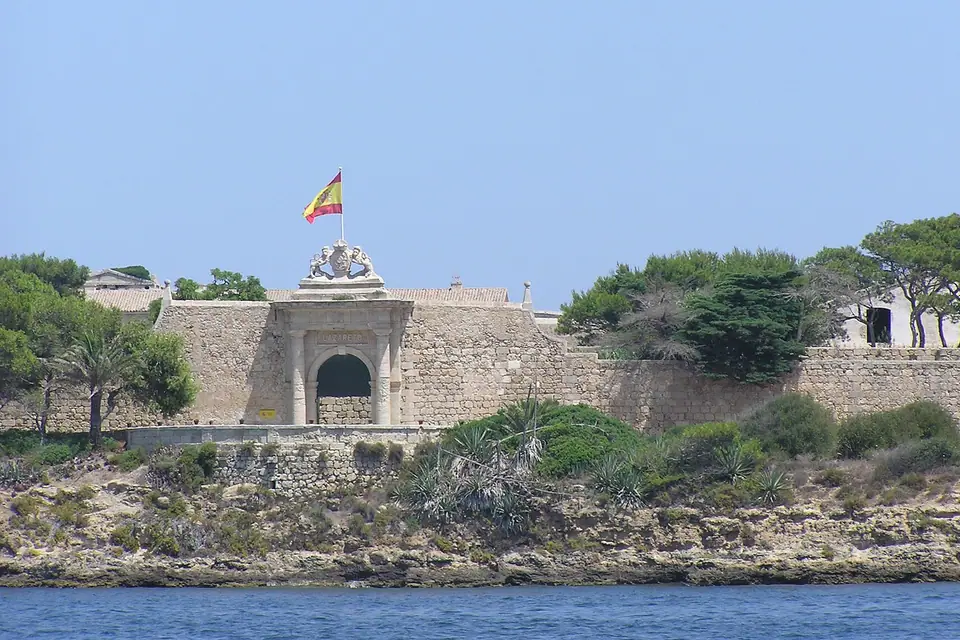
Maó Lazaretto, guided visit to the island
Guided visit to the former lazaretto in Maó harbour, an eighteenth-century complex built to quarantine ship crews.
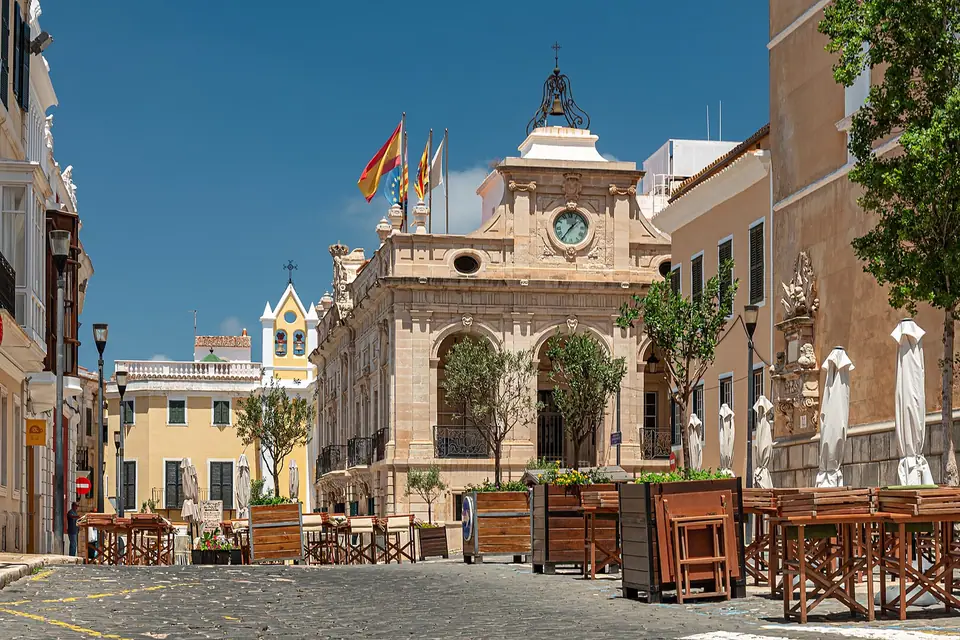
Maó historic centre free tour
A guided walk of 90 minutes to two hours from Plaça de s'Esplanada to Plaça de la Miranda, with a voluntary tip for the guide.
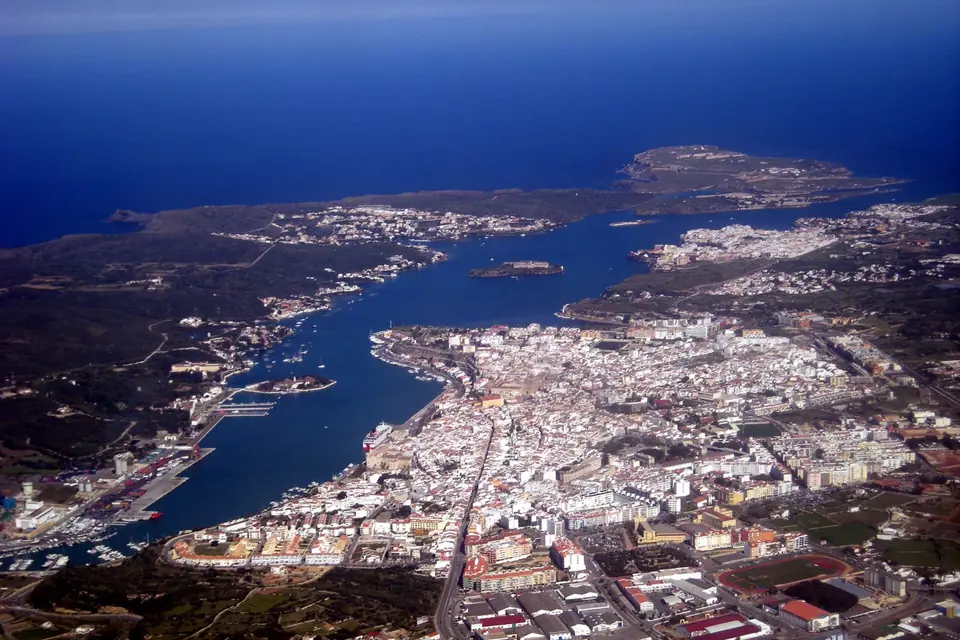
Underwater-view catamaran cruise around Maó harbour
A catamaran cruise around one of the Mediterranean's longest natural harbours, with a lower deck for watching the seabed.
Talayotic Menorca: the World Heritage sites
The «Talayotic Menorca» nomination was inscribed on UNESCO's World Heritage List in September 2023, at the Committee's session in Riyadh (the Spanish government published the news on 18 September). The property has nine component parts covering 3,527 hectares, about 5% of the island, and cyclopean structures dating from the Bronze Age (1600 BCE) to the Late Iron Age (123 BCE): talayots, taula sanctuaries, circular houses and navetas. Menorca's tourism website counts 1,568 inventoried prehistoric sites. You do not need to see them all; these four are enough to grasp it.
6. Naveta des Tudons. A dry-stone structure shaped like an upturned ship's hull, used as a communal tomb some 3,000 years ago, about 400 metres from the car park. The official Talayotic Menorca website gives general admission as 2 euros (1.20 reduced, free for under-8s and on Mondays), although other guides differ on opening times. It is a short, easy stop, and UNESCO names it among the key sites.
7. Son Catlar. Probably the most impressive site for sheer scale: a wall circles the settlement, with several talayots and the taula enclosure inside. It lies in Ciutadella and the official calendar includes special activities such as full-moon outings and stargazing. There is no official price or timetable: check menorcatalayotica.info. Nearby, Cala Morell has a necropolis of artificial caves and a coastal settlement, also part of the property.
8. Torre d'en Galmés and Torralba d'en Salord. In Alaior, Torre d'en Galmés is a wide settlement with talayots, a taula enclosure and houses, some reused in later periods; according to the official Camí de Cavalls portal, the Camí de Cavalls passes about 2 km away on the Son Bou to Cala en Porter stretch. Torralba d'en Salord has a monumental taula and is one of the island's most imposing structures; the official calendar lists special summer visits and stargazing, and one review mentions restoration works through 2026 and short opening hours in October. In summer, avoid midday.
9. Trepucó and Talatí de Dalt. These are the easiest sites from Maó. Trepucó keeps a taula enclosure, two talayots and part of a wall with two square towers; Talatí de Dalt is a taula sanctuary in open country with far fewer visitors, which in 2025 hosted a night-sky experience whose proceeds supported a new excavation. Both are among the sites UNESCO highlights. Confirm prices and hours on the official website.
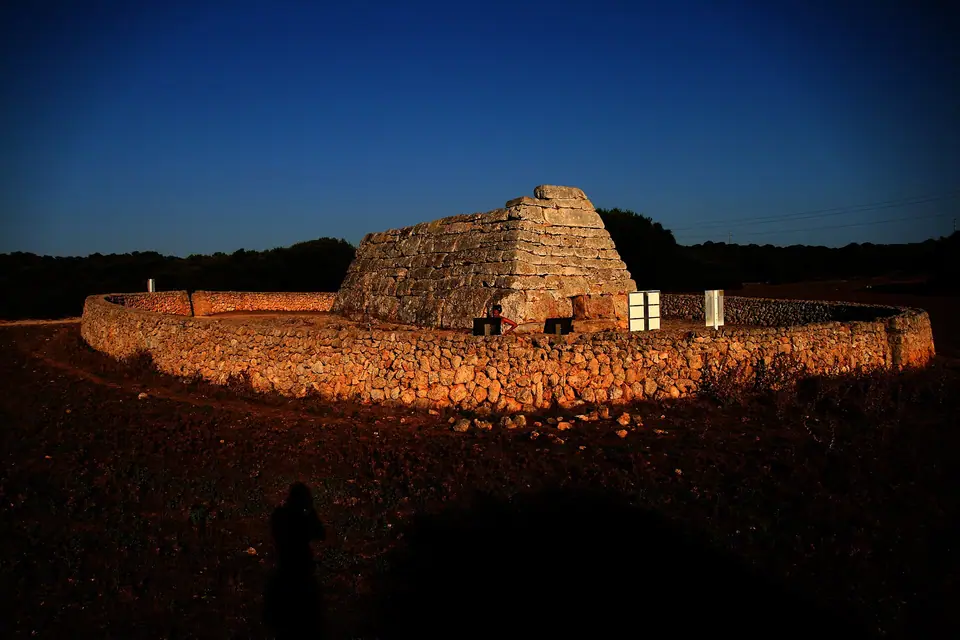
Naveta des Tudons burial chamber
Upturned-boat-shaped burial monument beside the Maó–Ciutadella road, one of the emblems of Talayotic Menorca.
Google lists it shut on Saturdays and Sundays
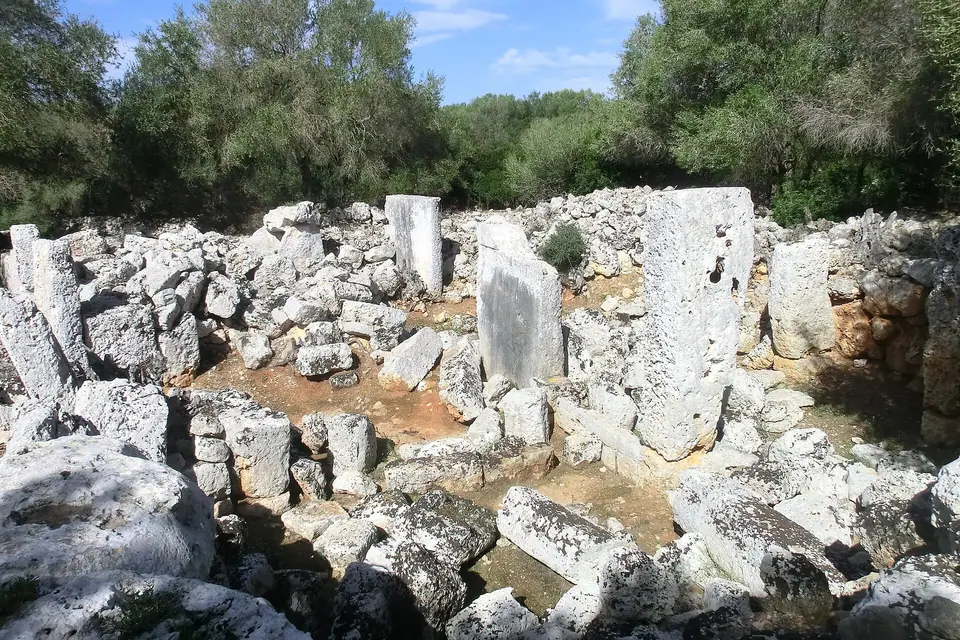
Son Catlar walled Talayotic town
Talayotic settlement ringed by a cyclopean wall, with talayots and a taula sanctuary.
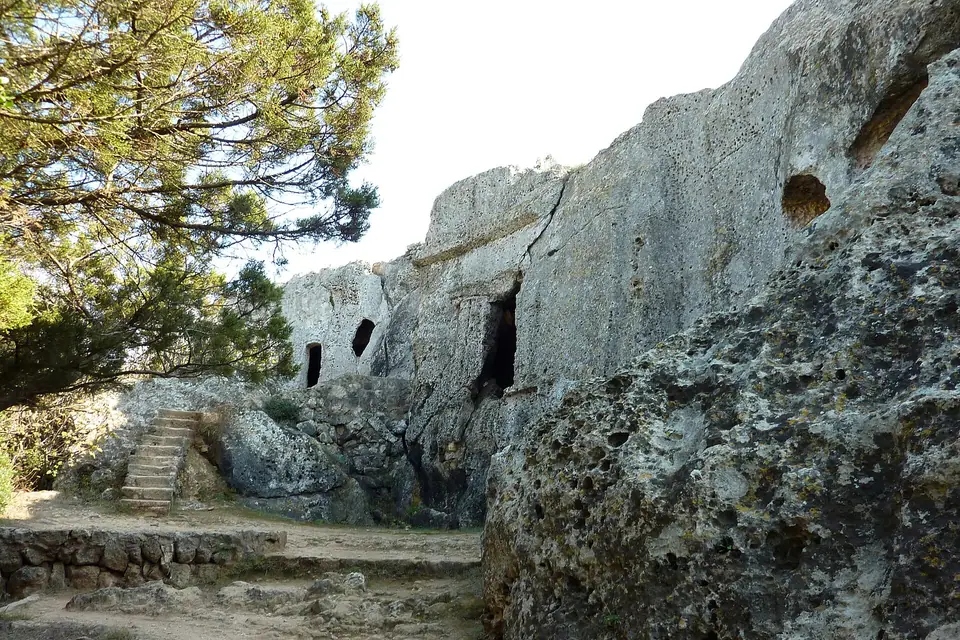
Cala Morell necropolis and coastal settlement
Rock-cut tombs and a settlement beside the cove on Ciutadella's north coast.
Google lists it shut on Saturdays and Sundays
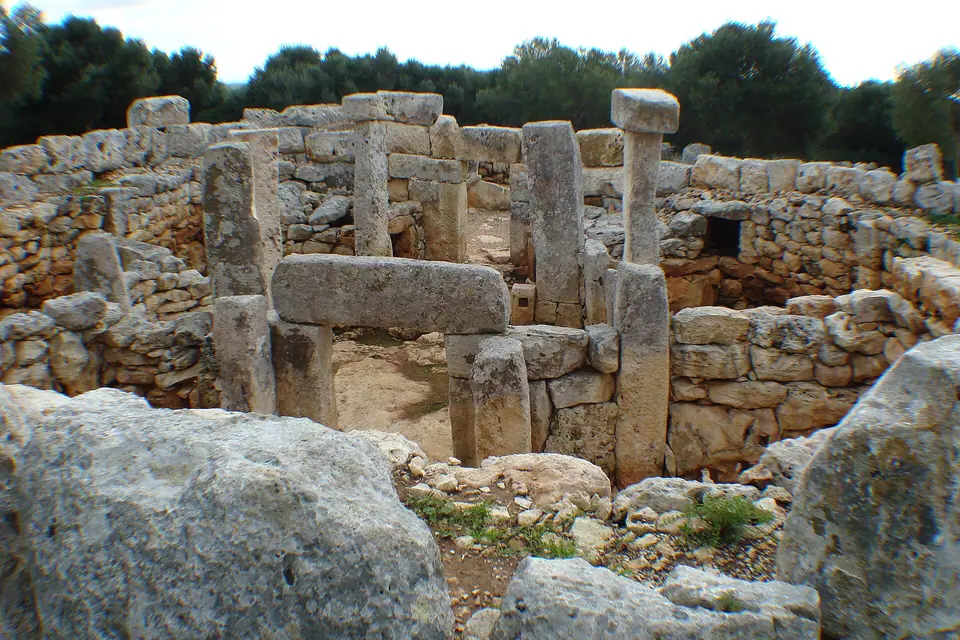
Torre d'en Galmés Talayotic settlement
Large settlement with three talayots, a taula enclosure and houses from several periods, in the south of Alaior, one of the island's most complete.
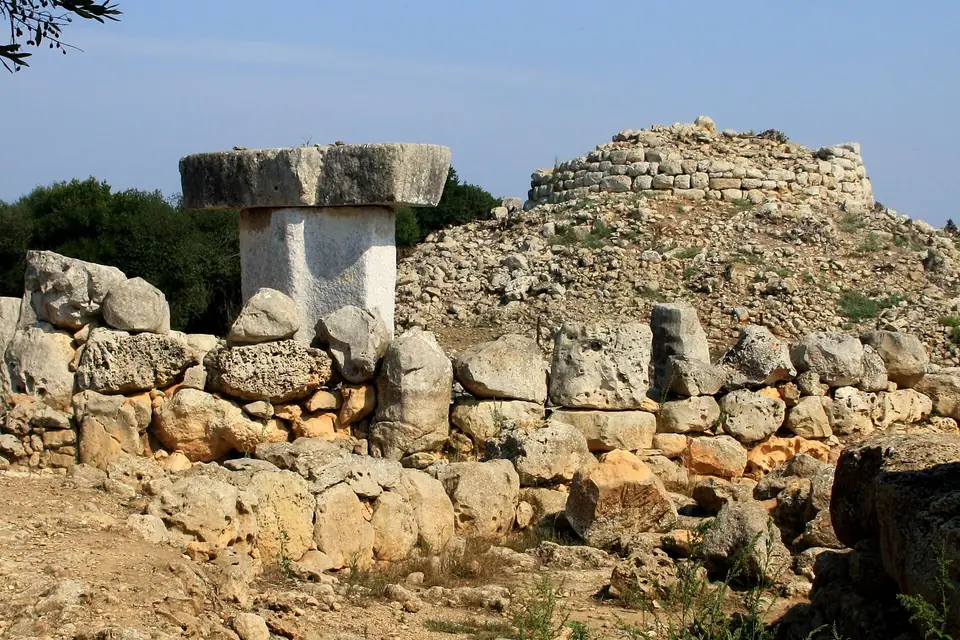
Torralba d'en Salord settlement with taula
Settlement with a large taula and a talayot beside the main road; special summer experiences and conservation works.
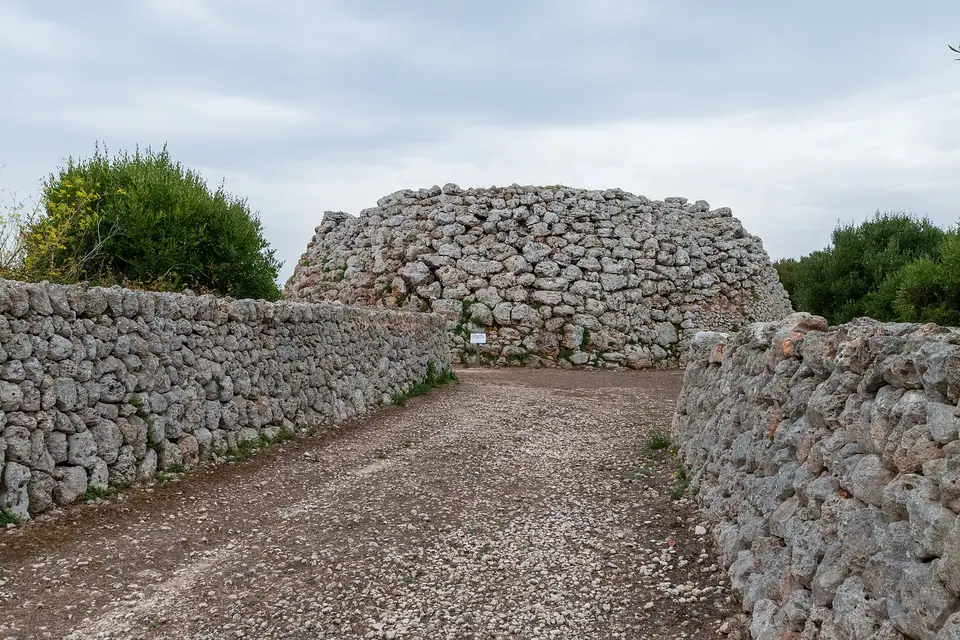
Trepucó settlement with taula and walls
Settlement on the edge of Maó with a very tall taula, two talayots and remains of a wall with square towers.
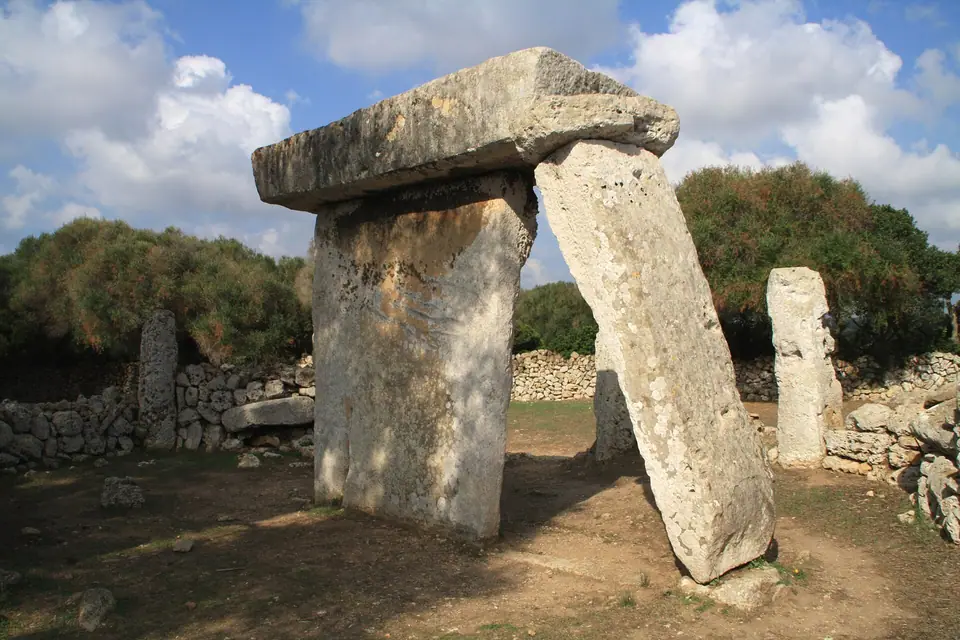
Talatí de Dalt taula and settlement
Talayotic settlement with a taula sanctuary near Maó, which also hosts excavations and night-time activities.
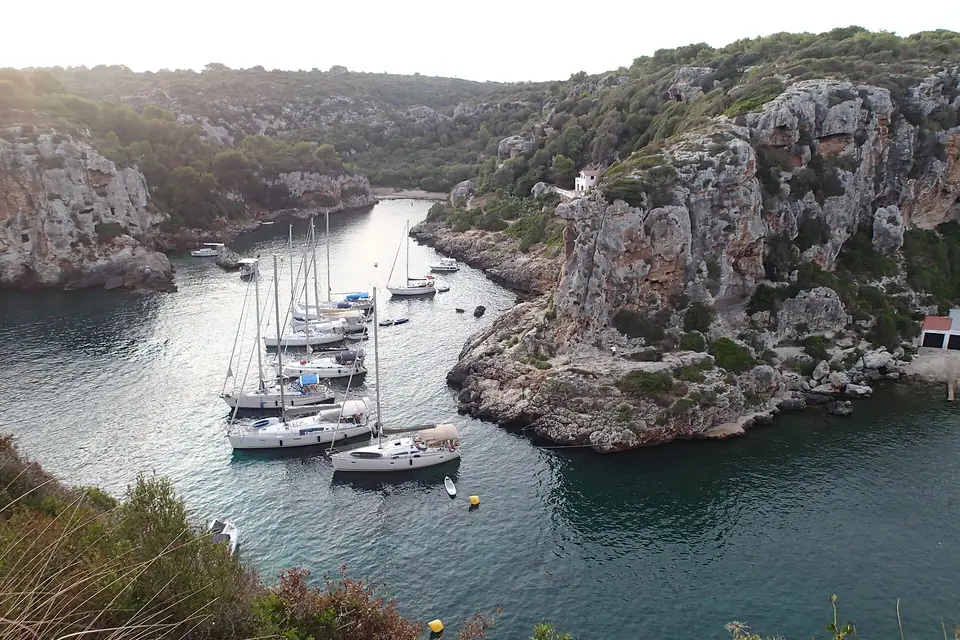
Calescoves cave necropolis
More than ninety burial caves cut into the cliffs of two ravines, beside a clear-water cove.
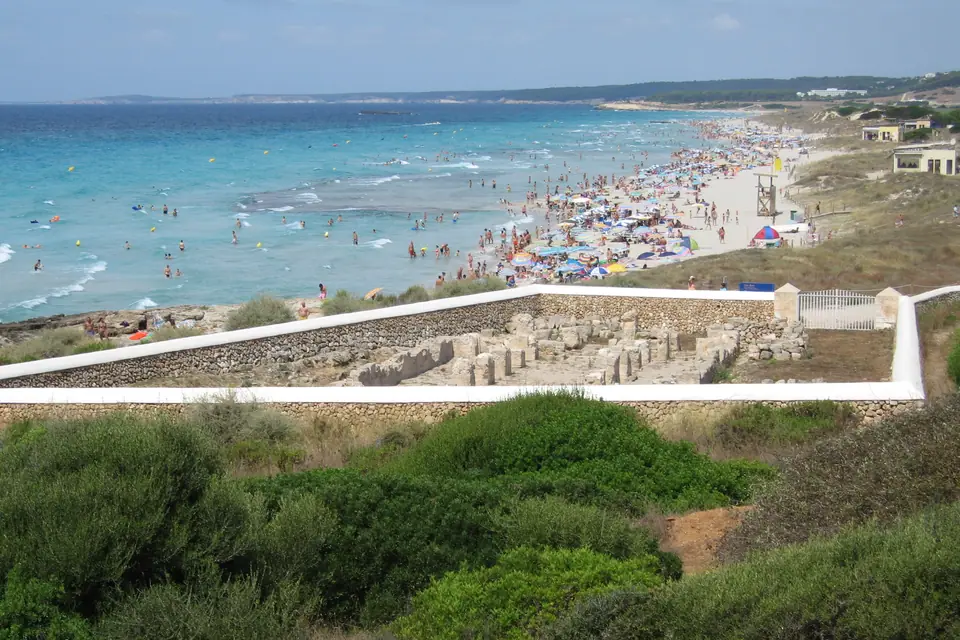
Early Christian basilica at Son Bou
Remains of an early Christian basilica beside Son Bou beach, freely accessible according to guides.
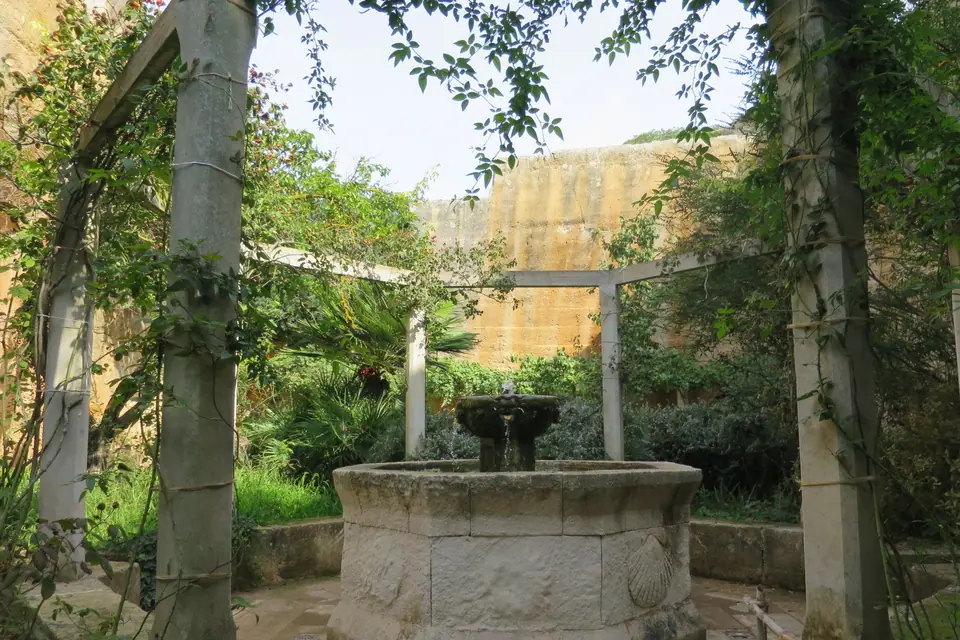
Líthica – Pedreres de s'Hostal
Líthica, the s'Hostal quarries
Former sandstone quarry turned into gardens, labyrinths and stage-like spaces near Ciutadella.
Southern coves and ravines: Turqueta, Macarella, Galdana and Algendar
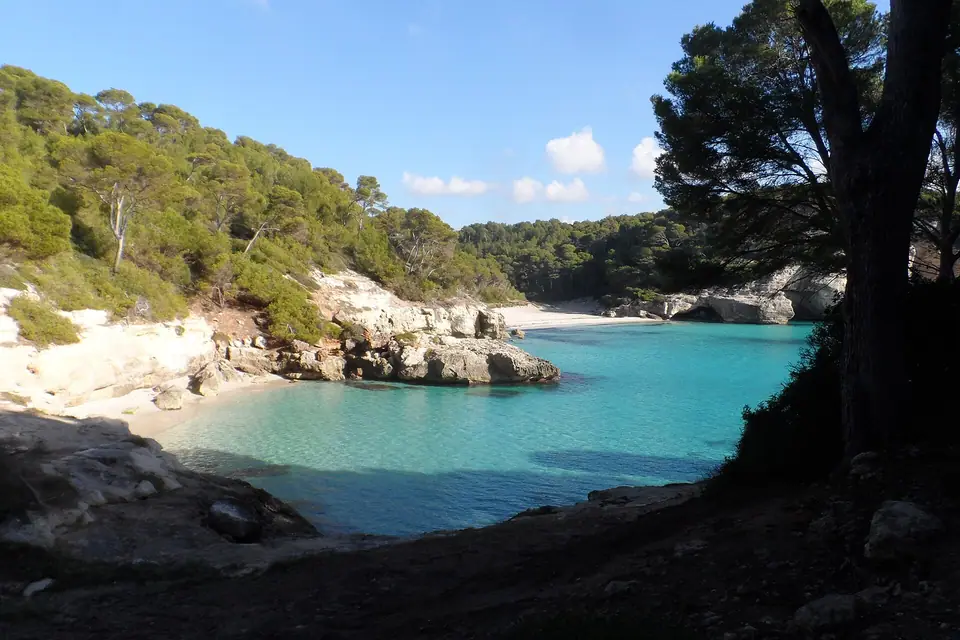
10. Cala en Turqueta, Macarella and Cala Galdana. These are the beaches with the most photographs, and stage 13 of the Camí de Cavalls, from Cala en Turqueta to Cala Galdana, links them in 6.38 km with 172 m of cumulative ascent according to the official portal: it moves from dry scrub into shaded ravines with holm oaks. For Macarella, the Consell has kept a shuttle from Ciutadella in recent summers and does not admit private cars; in 2024 it refused to reopen access, and we have not confirmed the 2026 rules. At Turqueta and Son Saura the car parks have limited capacity. From Cala Galdana, the water taxi (from 30 euros per adult according to a reseller, a crossing of 20 to 30 minutes) serves Macarella, Turqueta, Mitjana and other coves.
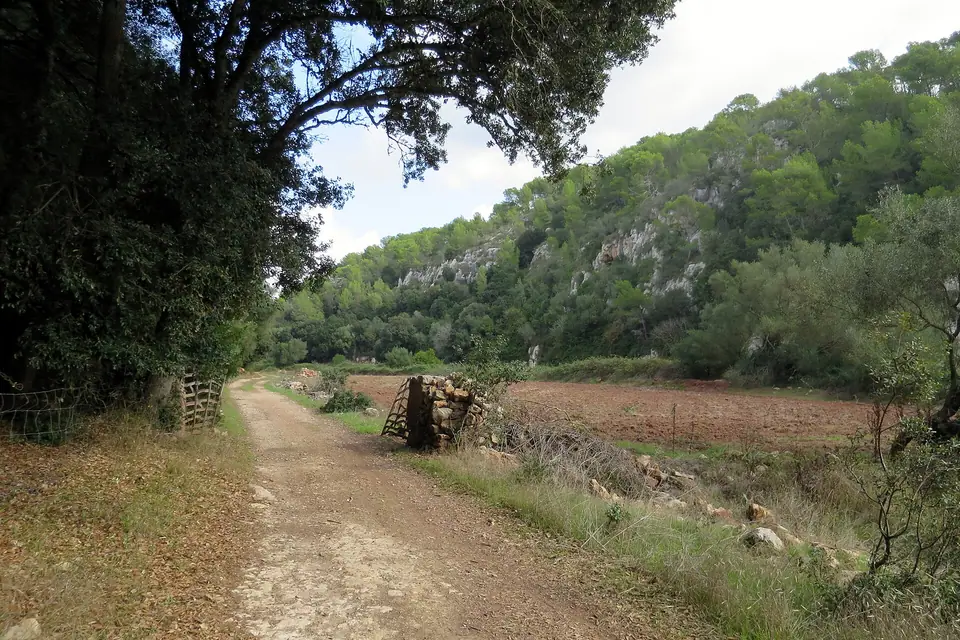
11. Barranc d'Algendar and Cova des Coloms. Stage 14, Cala Galdana to Sant Tomàs (10.4 km), is nicknamed the «Ruta dels Barrancs» and passes Algendar, Trebalúger and Albranca. The Barranc d'Algendar can be walked from Ferreries or from Cala Galdana; the official geological sheet gives about 8.5 km from the Puig de Santa Magdalena, other sources say 7, and many properties near Cala Galdana are private, so keep to the public paths. Cova des Coloms, a Bien de Interés Cultural (a protected cultural site), is reached from the Es Migjorn Gran cemetery along the Malagarba path; the main hall is roughly 50 metres wide, the path is stony and you need a torch.
Camí de Cavalls on foot: Cala en Turqueta – Cala Galdana
A single Camí de Cavalls stage on foot, independent and free: Cala en Turqueta – Cala Galdana.
Google lists it shut on Saturdays and Sundays
Water taxi from Cala Galdana to Trebalúger, Fustam, Escorxada or Macarella
A boat of up to ten seats that drops you at coves reached only on foot or by sea and collects you at an agreed time.
Walking the Barranc d'Algendar
A route through the Menorcan ravine richest in springs, with walls of almost 80 m, from Ferreries towards Cala Galdana.
Cova des Coloms via the Barranc de Binigaus
A signposted walk of about 30 to 40 minutes from Es Migjorn Gran to a large natural cave at the foot of the gorge.
Google lists it shut on Saturdays and Sundays
Horse ride along the south-coast beaches
Menorca a Cavall's longest outing: a ride along several south-coast beaches starting near Ferreries.
Google lists it shut on Sundays
Monte Toro, Fornells and the north
12. Monte Toro. A road of under three kilometres climbs from Es Mercadal to the sanctuary and viewpoint, from where almost the whole island can be seen; sunrise and sunset are the best moments. An older guide says access is free and hours are arranged with the nuns, so call ahead. One guide says the sanctuary was built in the 17th century over an earlier Gothic church, and there is a restaurant at the top. From Maó, buses 1 or 51 reach Es Mercadal at the foot of the hill.
13. Fornells and Cap de Cavalleria. Fornells has around a thousand residents, more in summer, and its charm lies in whitewashed houses and the harbour. The British Fornells tower (1801-1802) is under 10 minutes on foot; a 2021 source gave 2.40 euros admission and hours from Easter to late October. On the bay, a watersports school hires kayaks from 17 euros for 2 hours (single) and offers paddleboarding and windsurfing. About 14 km from Es Mercadal, and about 5 km in a straight line from Fornells, stands the Cavalleria lighthouse, inaugurated in 1857 more than 90 metres above the sea, with parking beside it; stage 5 of the Camí de Cavalls (Cala Tirant to Binimel·là, 9.48 km) passes it, along with the dunes and the Roman site of Sanisera.
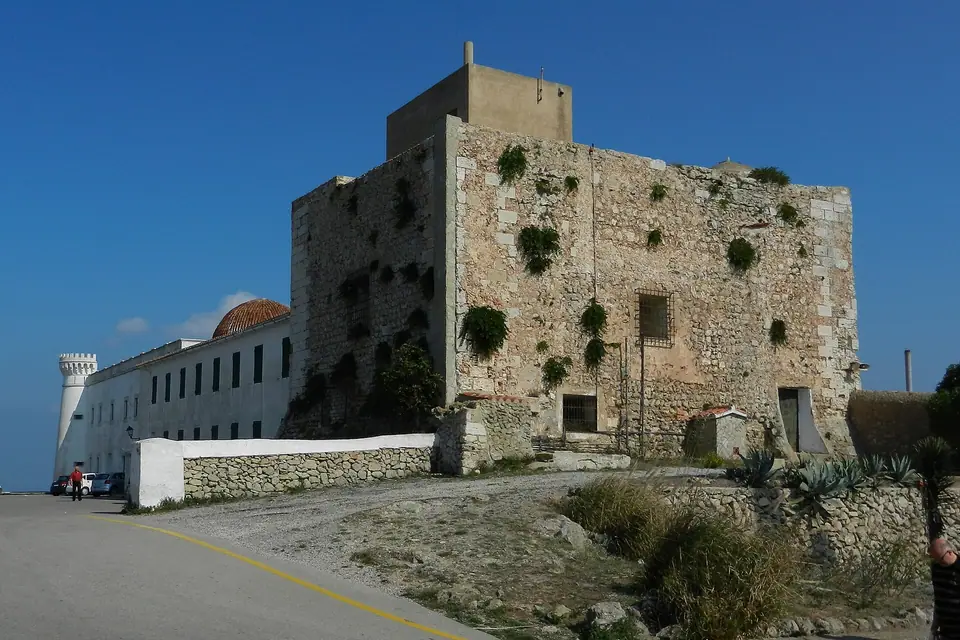
Monte Toro: viewpoint and sanctuary
The island's highest summit, with 360-degree views and a 17th-century sanctuary open to all, above Es Mercadal.
Google lists it shut on Saturdays and Sundays
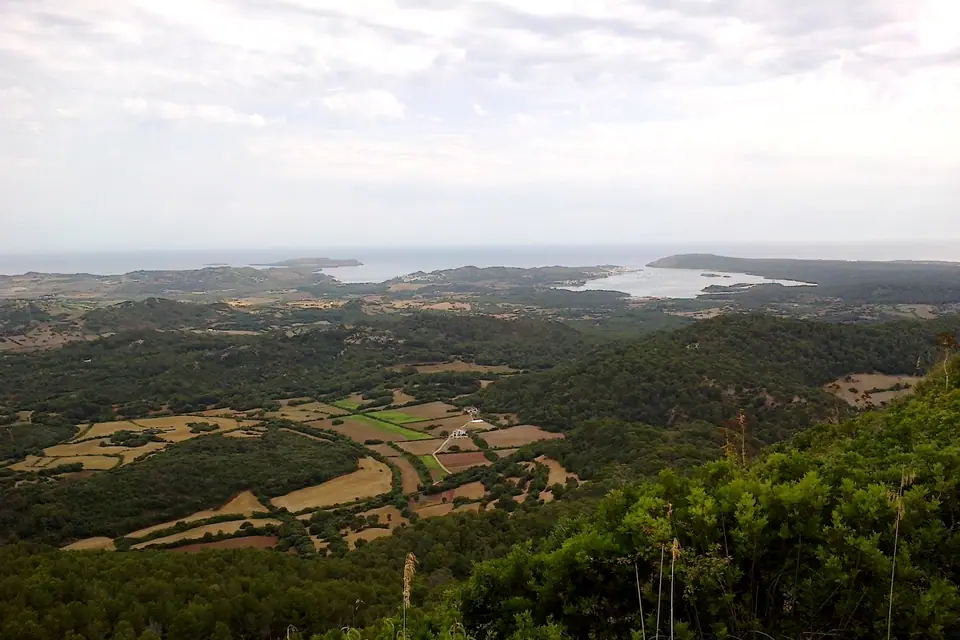
Santuari de la Mare de Déu del Toro
Monte Toro sanctuary and island viewpoint
Sanctuary at 358 metres, the highest point on Menorca, with views across the whole island on clear days.
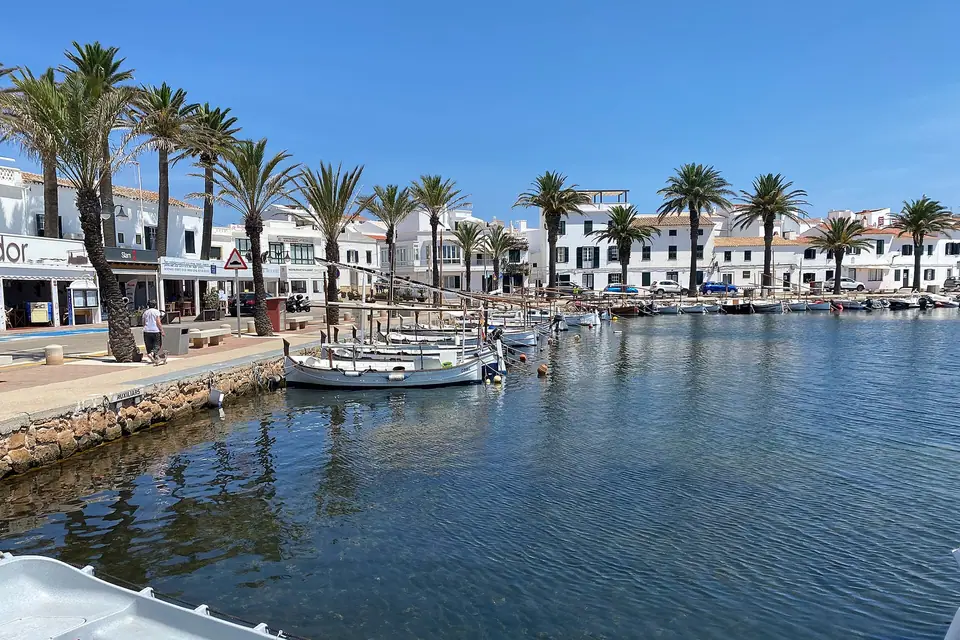
Fornells: fishing village and harbour
A village of whitewashed houses with coloured doors on the northern bay; you stroll its streets and harbour at no cost.
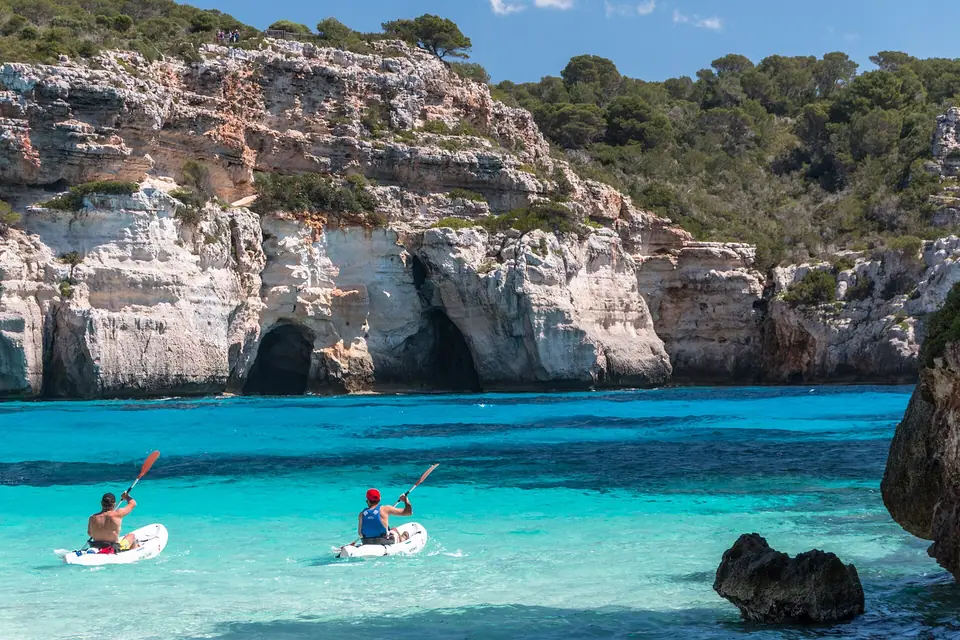
Kayak hire on Fornells bay
Single or double kayaks by the hour on Fornells bay, calm water for paddling without a guide.
Cap de Cavalleria lighthouse
A lighthouse at Menorca's northern tip with parking next to it and open cliffs; the Camí de Cavalls passes close by.
Three-hour north-coast boat trip from Fornells
Two swim stops, a cheese and sobrasada tasting and the coves and caves of the marine reserve, departing at 10:00 and 14:30.
East and south-east: s'Albufera des Grau, Favàritx and Binibèquer
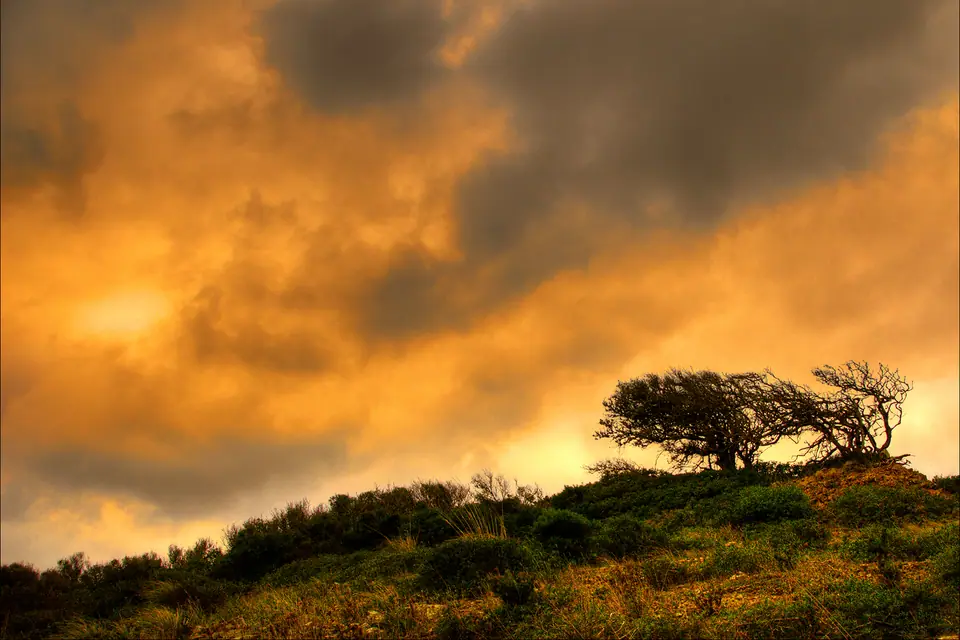
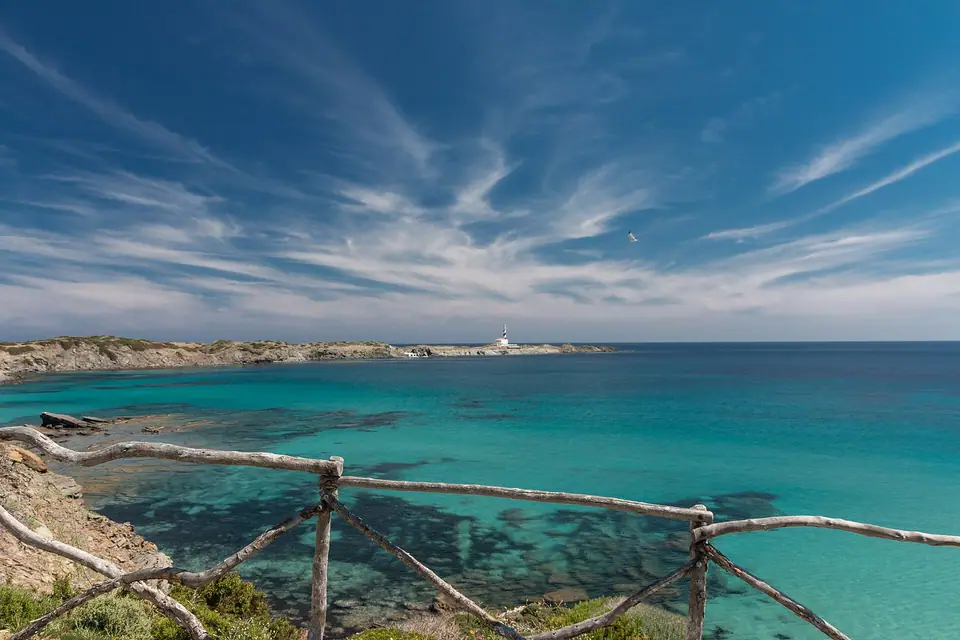
14. s'Albufera des Grau and Favàritx lighthouse. It is Menorca's only natural park, declared on 4 May 1995, covering about 5,067 hectares (a third of it marine) according to the Balearic government. The park is open 24 hours and the Rodríguez Femenías reception centre opens 9:00 to 15:00 daily; there are three signposted trails (Cala Llimpa viewpoint, Santa Madrona and sa Gola). Bikes and horses are not allowed on beaches and dunes, and dogs are barred from wetlands and trails. Favàritx lighthouse sits in a landscape of dark rock and sparse vegetation, with a 28-metre tower built in 1917 and finished in 1922. In the tourist season there is a bus from Maó (line 43, per the Balearic government); the Consell lists a «Bus Favàritx» on its website, and reports from earlier years describe summer closures to cars: confirm the current rule.
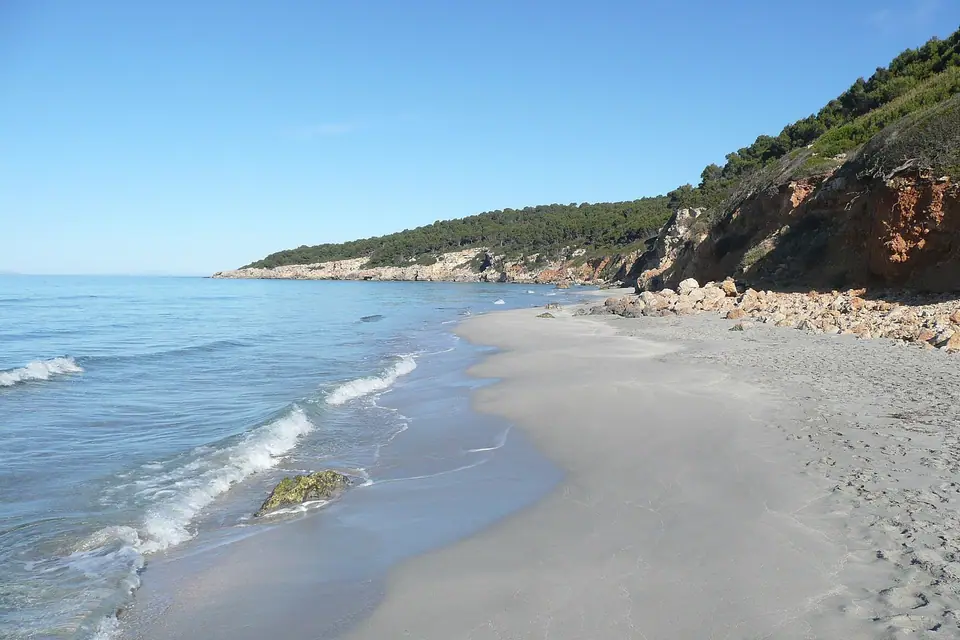
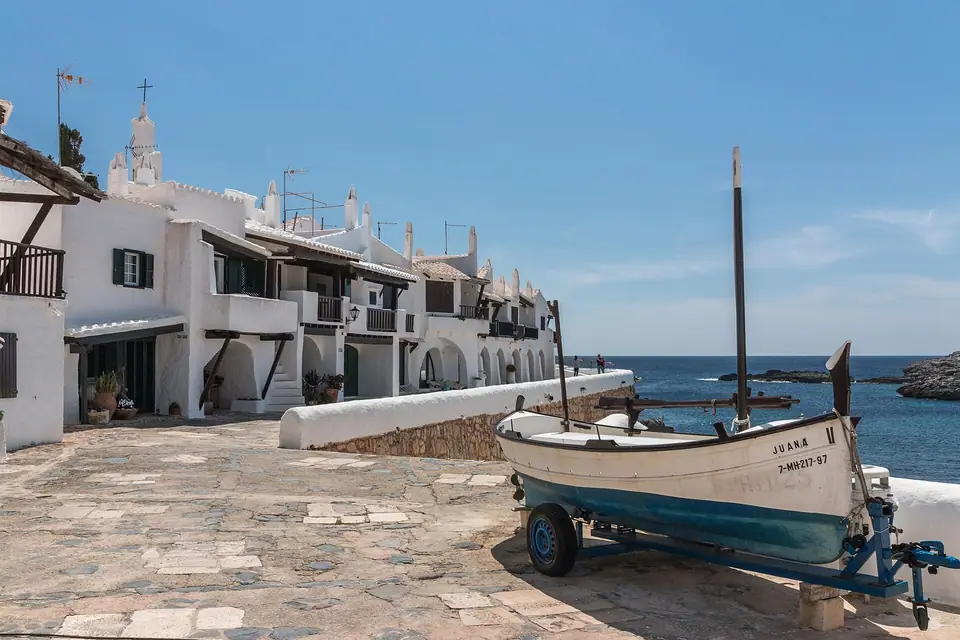
15. Binibèquer Vell and Illa de l'Aire. Binibèquer Vell is a fishing-village-style development whose last houses were finished in the 1970s; the first was Casa Candi. Walk it respectfully, as some locals criticise the growth in tourism. Stage 18 of the Camí de Cavalls, from Binissafúller to Punta Prima (8.06 km), is flat, passes Binibèquer and lets you see the Illa de l'Aire lighthouse, reachable only by sea, with a 165-step spiral staircase and the tallest in the Balearics until 1977. Guided bike and e-bike rides in the area start from Punta Prima.
Govern de les Illes Balears (Espais Naturals Protegits)
s'Albufera des Grau: reception centre and walks
A natural park of wetlands and coast in north-east Menorca, with the Rodríguez Femenias reception centre open every morning.
Parc Natural de s'Albufera des Grau (Centre Rodríguez Femenías)
Guided visit to s'Albufera des Grau
A guided visit of about two hours to the natural park, in groups of up to 20 starting from the interpretation centre.
Favàritx lighthouse and the dark landscape of the cape
A lighthouse on the tip of Cap de Favàritx inside the natural park, among dark rocks; in summer car access is restricted.
Binibeca Vell: a stroll through the white village
A white maze of lanes built to look like a fishing village, by the sea in Sant Lluís; explored on foot.
Guided bike tour around Binibeca and the south-east
Three hours by bike around the south-east: Binibeca fishing village, defence towers, beaches and the harbours of Biniancolla and Binibeca.
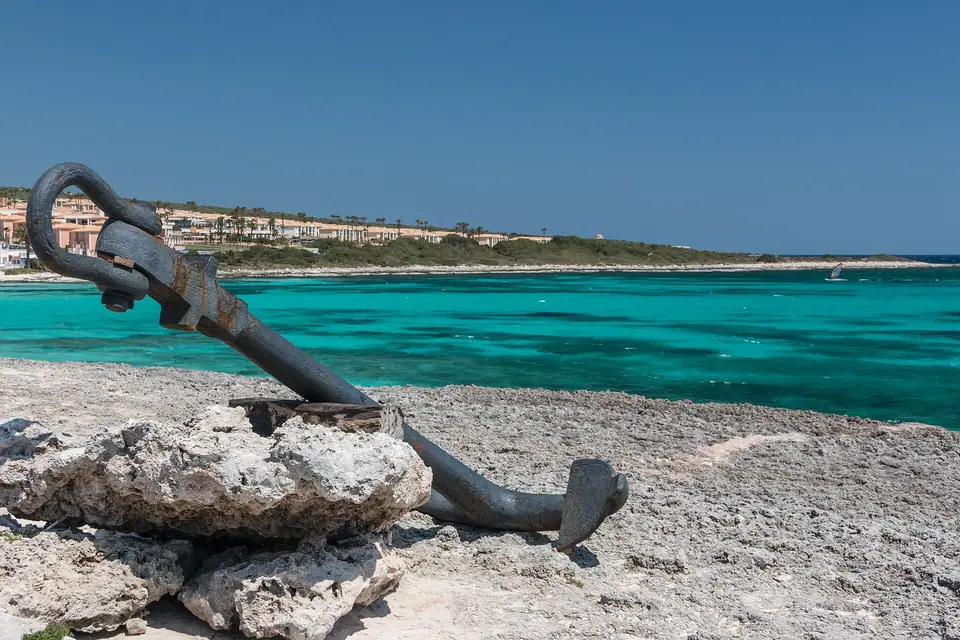
E-bike tour of the south-east fishing villages
About 20 easy km by e-bike from Punta Prima via Sant Lluís, Trebalúger and Es Castell, with a stop at Cales Fonts.
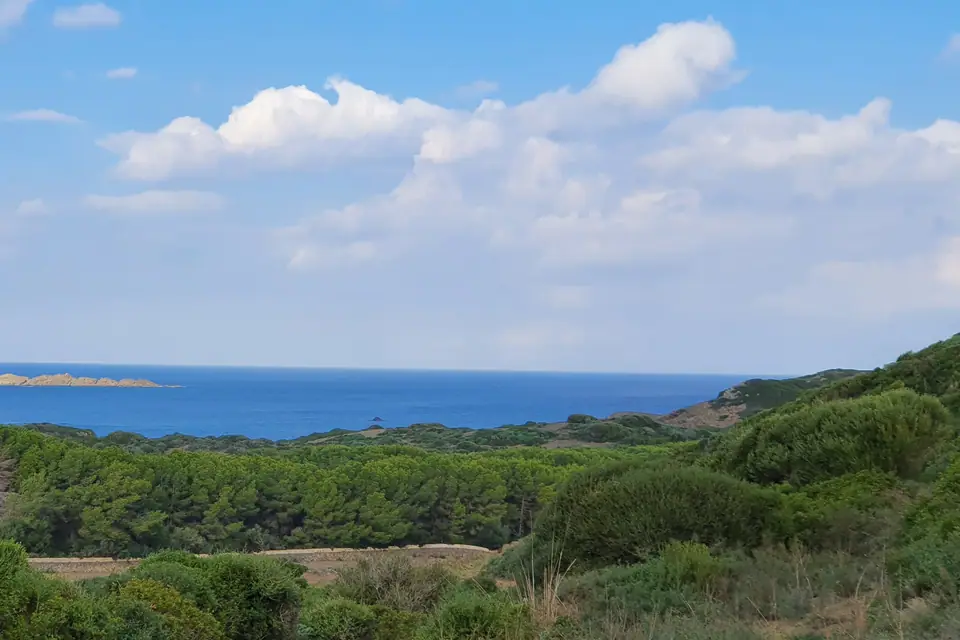
Water taxi from Es Grau to Colom Island
A short crossing from Es Grau pier to Colom Island, with about four hours free to swim in its coves.
How to combine it: areas, heat and transport
The island divides comfortably into four days by car: west (Ciutadella, Pont d'en Gil, Naveta des Tudons, Son Catlar), south (coves, ravines and Torre d'en Galmés), north (Monte Toro, Fornells, Cavalleria) and east (Maó, La Mola, Albufera des Grau and Favàritx). That is our own suggestion, not an official route.
Heat matters: according to AEMET's normal values for Menorca airport (1981-2010), the average daily maximum is 28.9 °C in July and 29.2 °C in August, and in August 2025 the Cala Galdana station recorded 36.9 °C. July 2026 was the warmest in the Balearics since 1961. Shadeless sites and coves work better first thing or in the late afternoon, and in spring and autumn. To get around without a car, the Consell publishes lines and timetables at mou-tmenorca.com and answers on +34 971 36 24 33; the busiest beaches have their own shuttles.
Camí de Cavalls on foot in stages with accommodation and logistics
The full Camí de Cavalls or its northern or southern half in 13 to 6 stages, with a bed at the end of each day and team support; walked self-guided.
Google lists it shut on Saturdays and Sundays
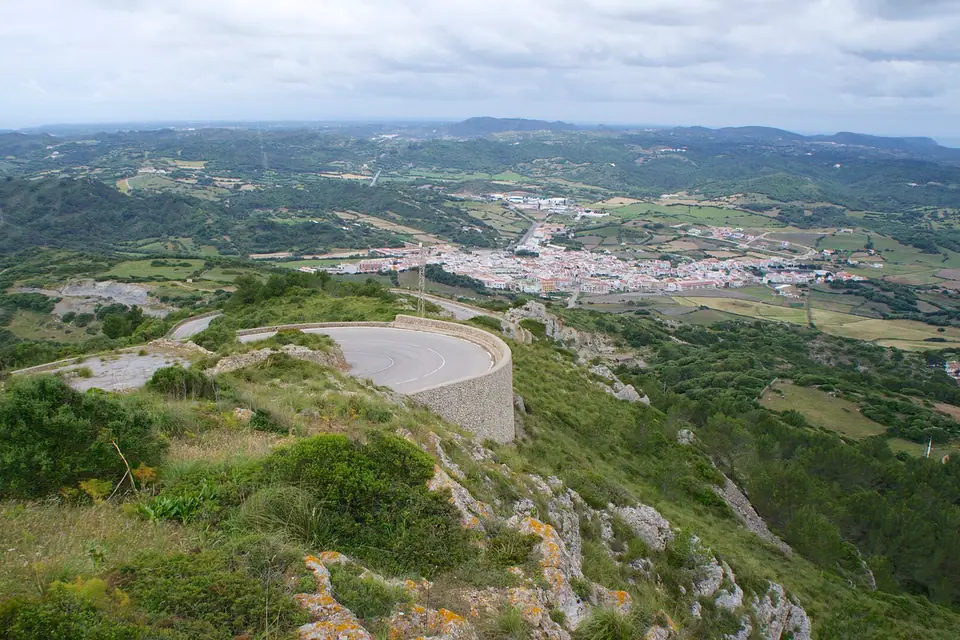
Full-day island excursion from Ciutadella
About seven hours with a guide from Ciutadella: old town, lunch overlooking Fornells bay, Monte Toro and the Torralba site.
Google lists it shut on Saturdays and Sundays
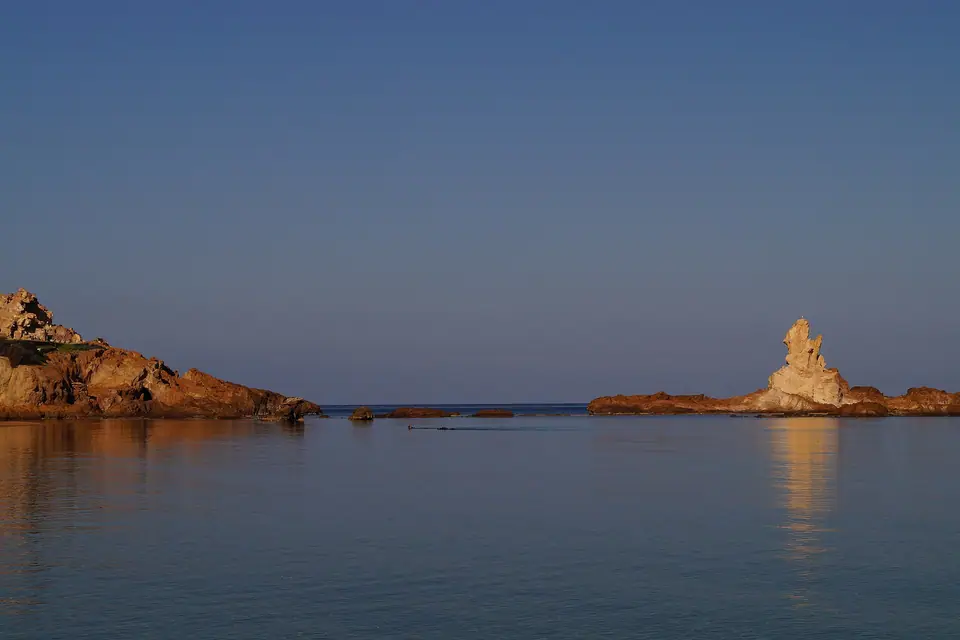
Jeep Safari Menorca (Menorca Discovery)
4x4 tour of lesser-known Menorca
A roughly three-hour open 4x4 ride from Fornells along farm tracks, with a light tasting of cheeses and cured meats.
Official sources
Our own text, written from these sources consulted up to 25 November 2026. Rules and traffic restrictions vary, so check them before the trip.
- Camí de Cavalls: official Consell Insular portal
- Talayotic Menorca: official website
- Spanish Government: Talayotic Menorca, the 50th World Heritage inscription (18 Sep 2023)
- UNESCO: Talayotic Menorca (property 1528)
- Menorca.info: Talayotic Menorca, what to see
- Menorca.info: Ciutadella, the noble town
- Menorca.info: Menorca's lighthouses
- La Mola fortress: visits, hours and prices
- Museu de Menorca: hours and tickets
- Xoriguer distillery: visits
- Balearic Government: s'Albufera des Grau Natural Park
- MOU-T Menorca (Consell Insular): buses and roads
- AEMET: standard climate values, Menorca Airport
- Menorca.info: buses to Ciutadella's virgin beaches (2025)
Frequently asked questions
What is the one thing not to miss in Menorca?
It depends what you are after, but the most characteristic combination is Ciutadella, Maó harbour and one Talayotic site, as Talayotic Menorca has been a World Heritage Site since 2023. Then come the southern coves and s'Albufera des Grau.
How many days do you need to see Menorca?
With four days by car you cover the four areas in this guide: west, south, north and east. With three you have to choose; with a week there is time for the beach and a stretch of the Camí de Cavalls.
What is Talayotic Menorca and can you visit it?
It is the set of nine prehistoric components inscribed by UNESCO in 2023, with talayots, taulas, navetas and circular houses dating from 1600 to 123 BCE. Several sites can be visited: the Naveta des Tudons costs 2 euros according to the official website; for the rest, check times and prices at menorcatalayotica.info.
Do you need a car to see Menorca?
Ciutadella, Maó, Fornells and Binibèquer can be done without a car, and there is a regional bus plus shuttles to coves such as Macarella and to Favàritx in season. The archaeological sites and the corners of the north are easier with a car; check lines at mou-tmenorca.com.
When is the best time to visit Menorca?
For walking and visiting sites, spring and autumn because of the heat: the average maximum is about 29 °C in July and August, with much higher peaks. For beaches and boats, summer; some places, such as La Mola, close in January.
Atlas de Menorca editorial team · reviewed on 25 November 2026
More guides
- Menorca’s best beaches and coves: 40 of them, how to get there and which to pick
- Camí de Cavalls (GR 223): the 20 stages with official distances, rules and how to plan it
- Ferry to Menorca: from Barcelona, Valencia and the neighbouring island, to Maó or Ciutadella
- Menorca in winter: what is open, what closes and what the weather is like from November to March
- Menorca plans for rainy days
- Menorca plans with children
- Menorca on a budget: free and cheap plans
- Menorca without exertion: gentle plans